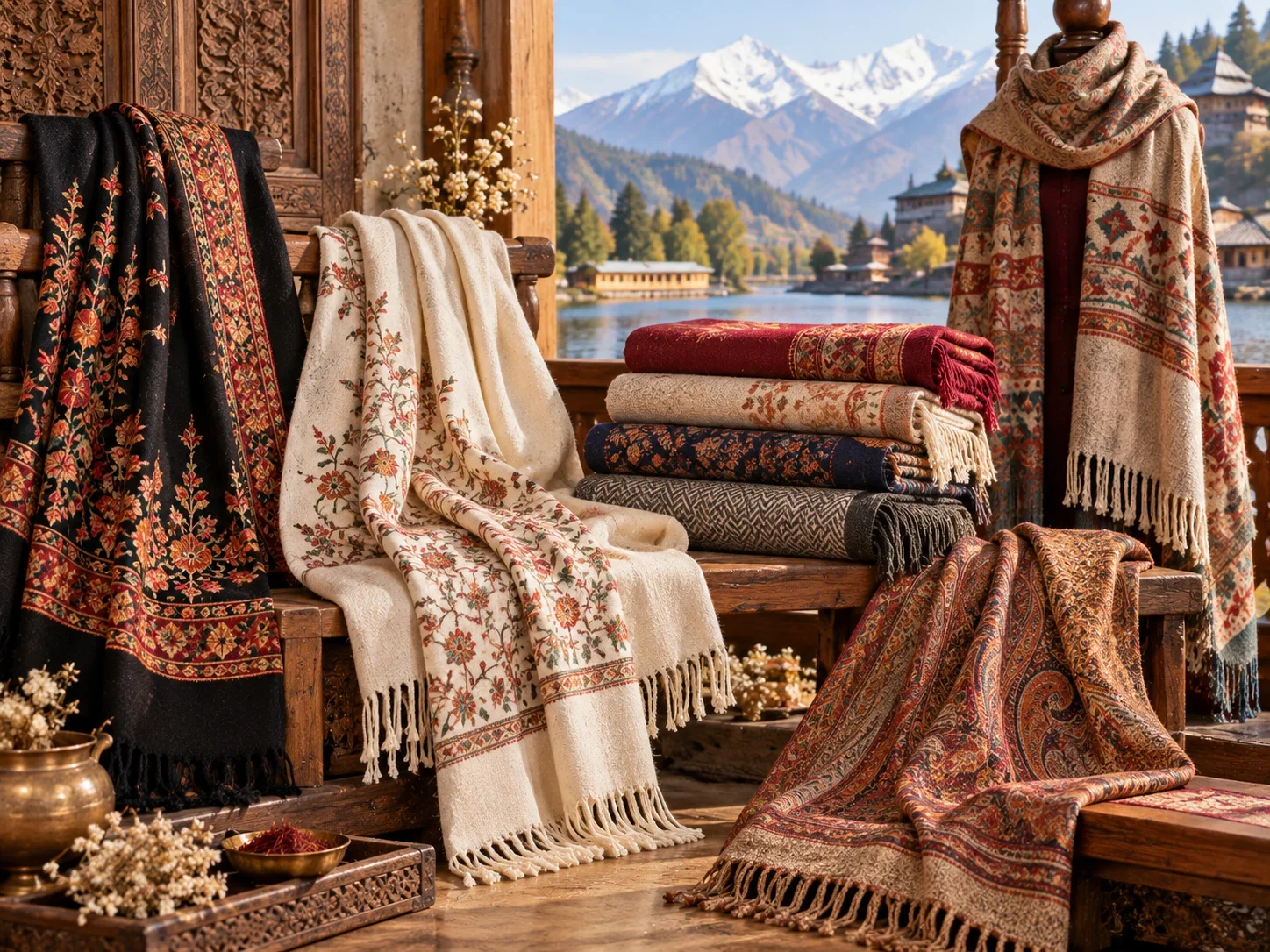
Crafts of Northern India
Every Craft Has a Story
Discover the history, materials and makers behind each craft — and shop pieces made by the artisans who keep it alive.
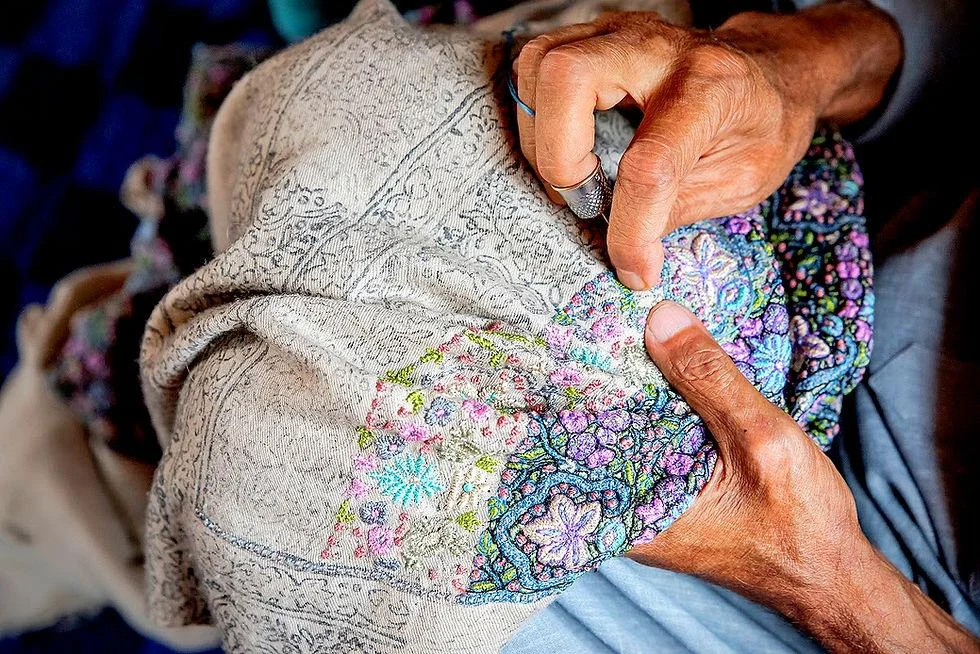
Basholi Pashmina
Basohli Pashmina is a century-old traditional handloom craft originating from the historic town of Basohli in the Kathua district of Jammu and Kashmir. Officially recognized with a Geographical Indication (GI) tag, this luxury textile is celebrated worldwide for its extreme softness, fineness, feather-light weight, and exceptional natural warmth.
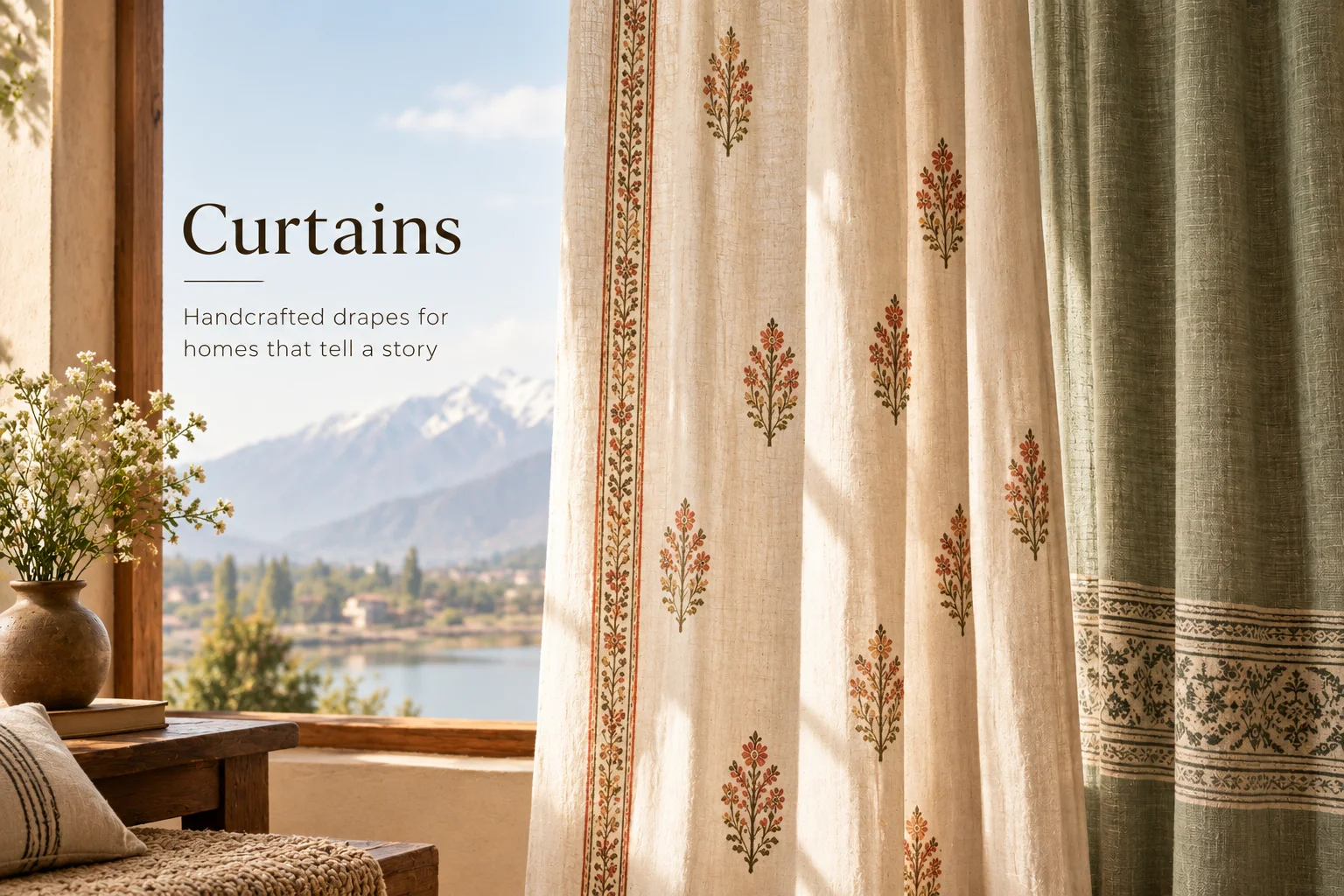
Curtain
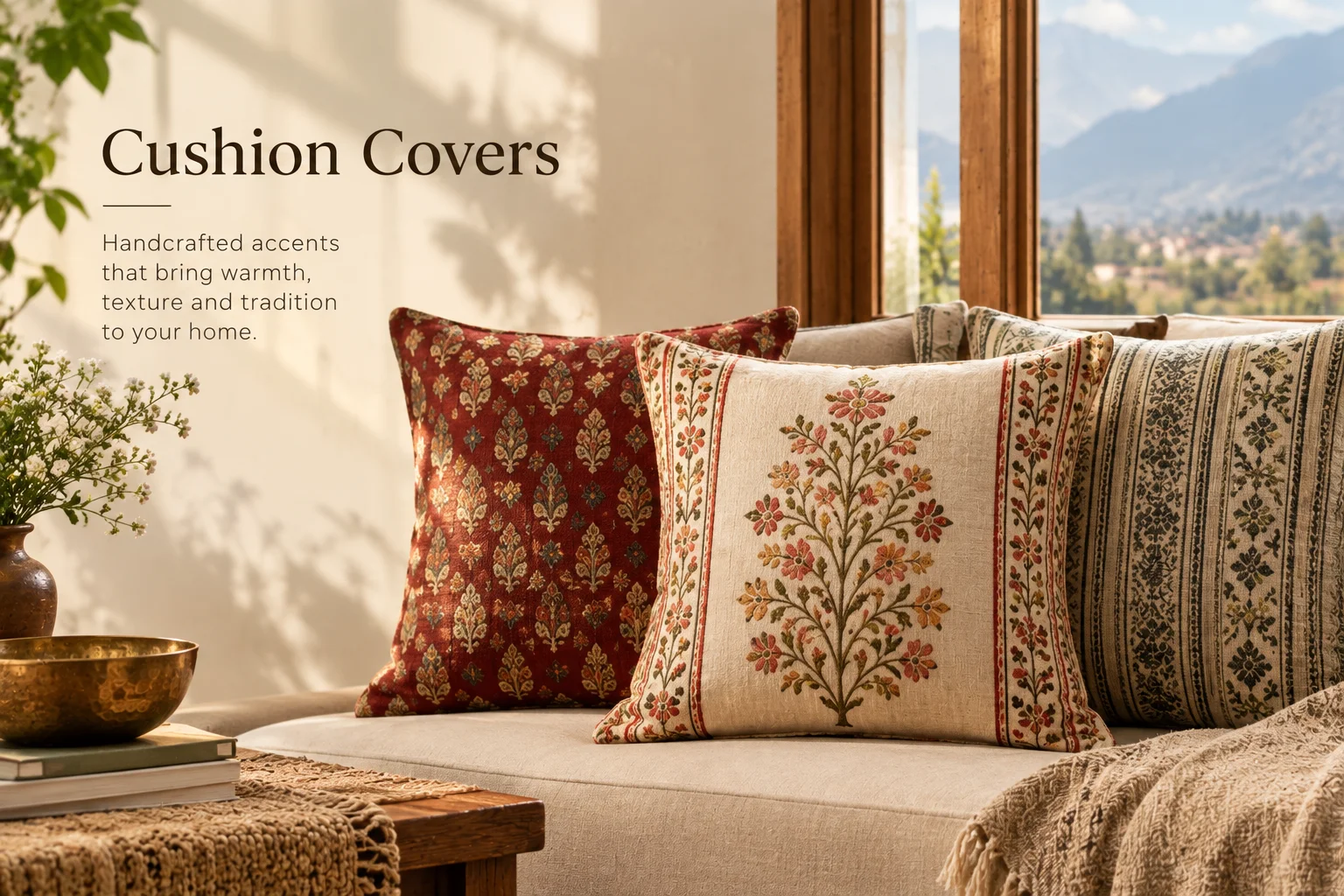
Cushion cover
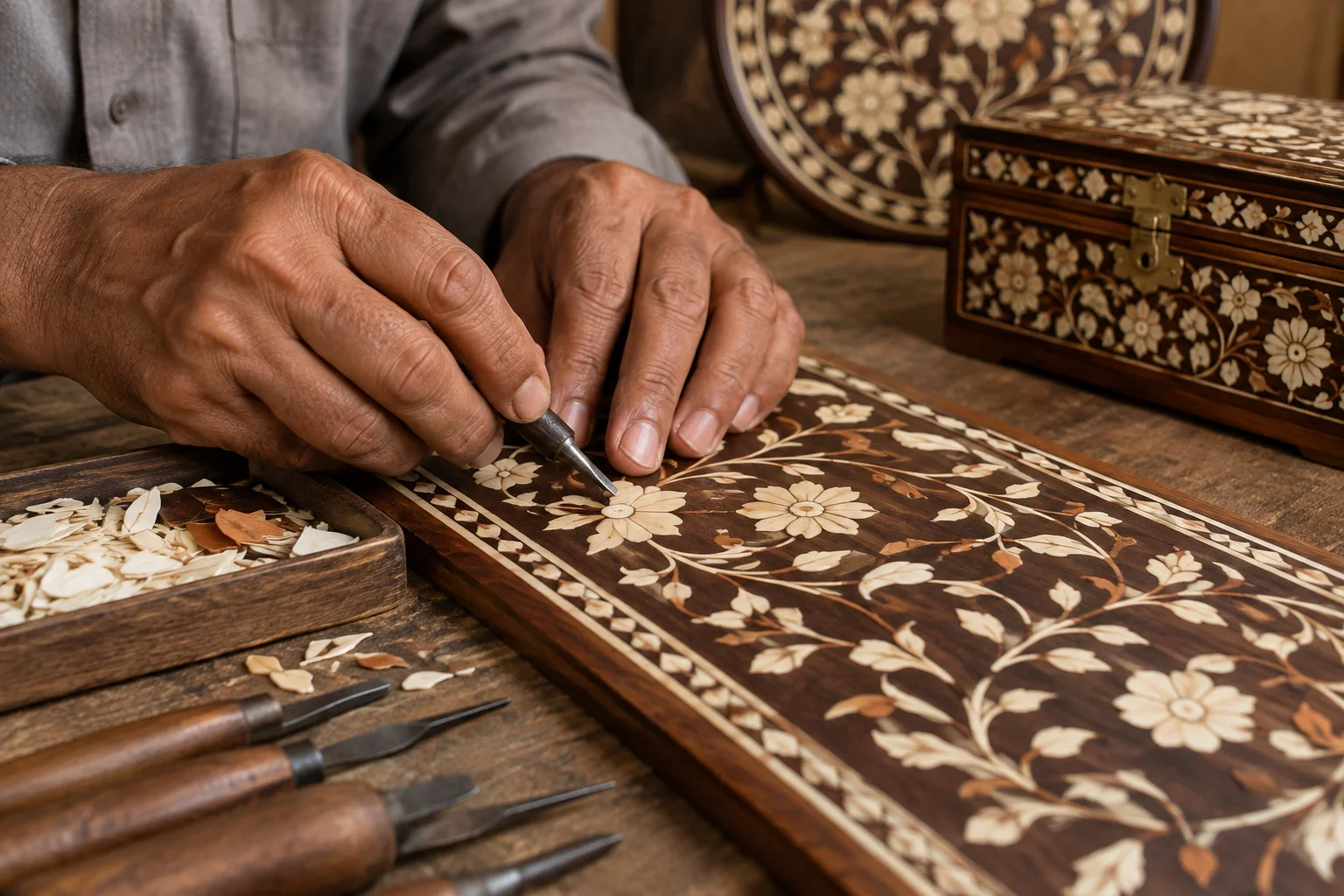
Hoshiarpur Wooden Inlay
Wooden inlay is a traditional craft of the Punjab region, with a history dating back approximately 350 years, according to Inlay World's website. Initially, artisans decorated musical instruments such as the veena, swarmandal, tanpura, and sitar with inlay work. Over time, the craft expanded to furniture, jewellery boxes, trays, chests, and other household objects.
Kaftan
Pharns
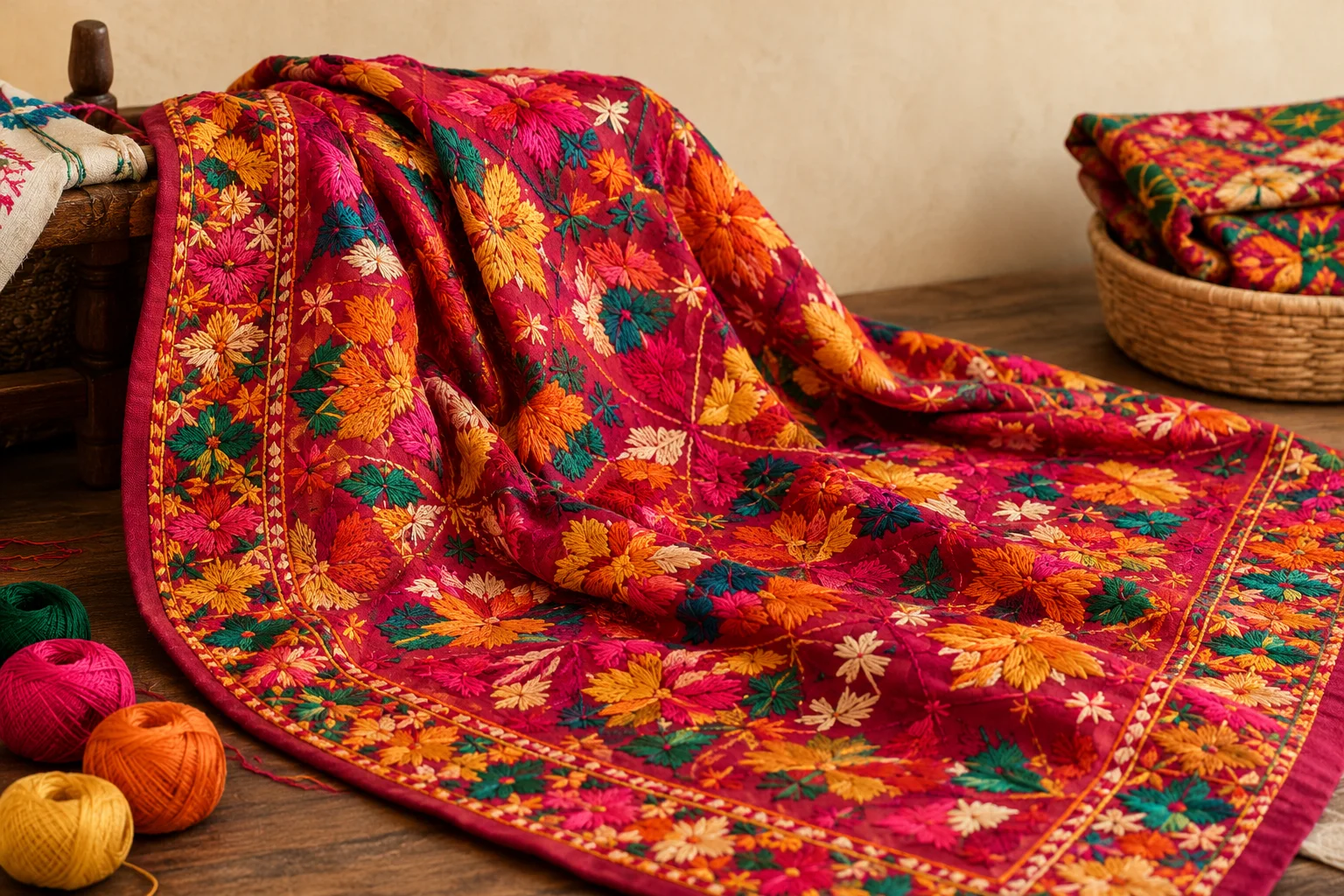
Phulkari
Phulkari, which literally translates to "flower work," is the vibrant and centuries-old folk embroidery craft from the Punjab region of South Asia. It is unique because it is traditionally embroidered from the reverse side of coarse cotton fabric (khaddar) using colorful, untwisted silk threads (pat) to create stunning geometric and floral patterns.
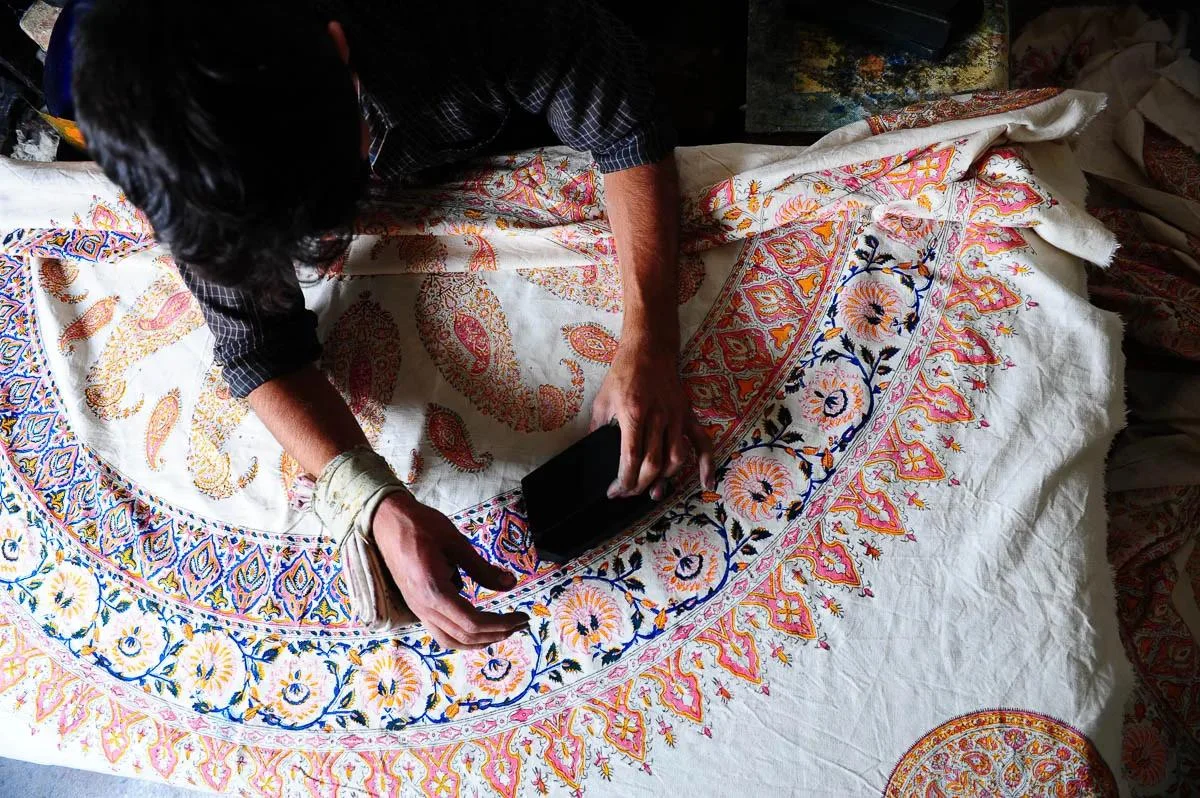 ▶ FILM
Samba Calico
Samba Calico block printing is a centuries-old textile craft from Jammu and Kashmir. Historically known as "Chhintawala Shehar" (City of Sheets), the town of Samba became famous during the 19th century under Maharaja Ranjit Singh. Artisans used hand-carved wooden blocks and organic vegetable dyes. They famously used local Bann pond water to uniquely fix the colors.
Saree